What Corporate America Gets Wrong About Its Most Valuable Asset
There is a woman sitting in your organization right now.
She has been there for years.
She knows where the bodies are buried and where the opportunities are hiding.
She has navigated every reorg, every leadership change, every cultural shift that threatened to destabilize everything around her and she has come out the other side steadier than most of the people who were supposed to be leading her.
She mentors the younger women on her team without being asked.
She solves problems before they become problems.
She reads the room in ways that cannot be taught and cannot be measured and cannot be replicated by anyone who has not lived through what she has lived through.
She is between 40 and 65.
She is your most experienced, most emotionally intelligent, most institutionally valuable employee.
And there is a very good chance your organization has no idea what she actually needs to stay.
The Investment Gap Nobody Is Talking About
Corporate America has spent the last decade making significant investments in talent development.
Leadership programs.
Mentorship initiatives.
Wellness benefits.
ERG communities.
DEI programming.
Most of it is well intentioned.
Some of it is genuinely good.
And almost none of it was designed with her in mind.
The leadership programs skew toward high potentials in their thirties who are being groomed for the next level.
The mentorship initiatives pair junior employees with senior leaders but rarely ask what the senior leaders themselves need to keep growing.
The wellness benefits cover gym memberships and meditation apps and therapy sessions that address symptoms without ever touching the root.
The ERG communities create belonging for specific identities but rarely create space for the particular experience of being a high-achieving woman in the second half of her career.
And the DEI programming, for all its value, tends to focus on getting women into the room without asking what happens to them once they have been there for twenty years.
The result is a woman who is pouring everything she has into an organization that has stopped investing in her.
Not maliciously.
Not intentionally.
But unmistakably.
And she feels it.
Every day she feels it.
What She Is Actually Carrying
Here is what nobody in the C-suite is asking about.
She is at the most complex intersection of her life.
Professionally she is at her peak.
She has the experience, the relationships, the institutional knowledge, and the judgment that took decades to build.
Personally she is navigating more than most of her leaders will ever know.
Aging parents who need her.
Children who are launching and still need her in different ways.
Relationships that have been on the back burner for years and are finally asking to move to the front.
A body that is changing in ways that medicine is only beginning to take seriously.
A sense of identity that is quietly shifting as the roles she built herself around start to evolve.
And underneath all of it a question she has not had time to answer.
Who am I when I am not being useful to everyone around me.
She is carrying all of this into your office every morning.
And she is carrying it invisibly because she is extraordinarily skilled at invisible carrying.
Because she has been doing it her entire career.
Because the organizations she has worked for rewarded the performance and never once asked about the cost.
What Happens When She Feels Unseen
She does not make a scene.
She never makes a scene.
She starts to disengage quietly.
The way she has always done hard things.
Quietly.
Without drama.
She stops raising her hand for the projects that would stretch her.
She stops mentoring with the same energy she used to bring.
She starts doing the job instead of doing everything beyond the job that nobody asked for but everybody benefited from.
She updates her resume.
Not because she wants to leave.
Because she has learned that the organizations that see her before she leaves are rarer than they should be and she has decided she deserves to work for one.
And when she goes she takes with her something that cannot be captured in an offboarding interview or a knowledge transfer document.
She takes the institutional wisdom that lived in her relationships and her judgment and her ability to read a room in ways that no onboarding process will ever replicate in her replacement.
The cost of losing her is enormous.
The cost of keeping her is not.
What She Actually Needs
She does not need another gym membership.
She does not need a generic wellness app or a mindfulness seminar or a leadership program designed for someone fifteen years younger than her.
She needs to be seen.
Fully.
As a whole person and not just a professional asset.
She needs programming that acknowledges the complexity of her life and gives her tools for navigating it without apologizing for having it.
She needs a language for what she is carrying.
A framework that connects her personal life to her professional performance and helps her understand that the two have always been the same conversation.
She needs to know that the organization she has given everything to sees her as someone worth investing in.
Not because she is on her way up.
Because she is already there.
And because the version of her that is whole and restored and genuinely thriving is worth exponentially more than the version of her that is quietly running on empty.
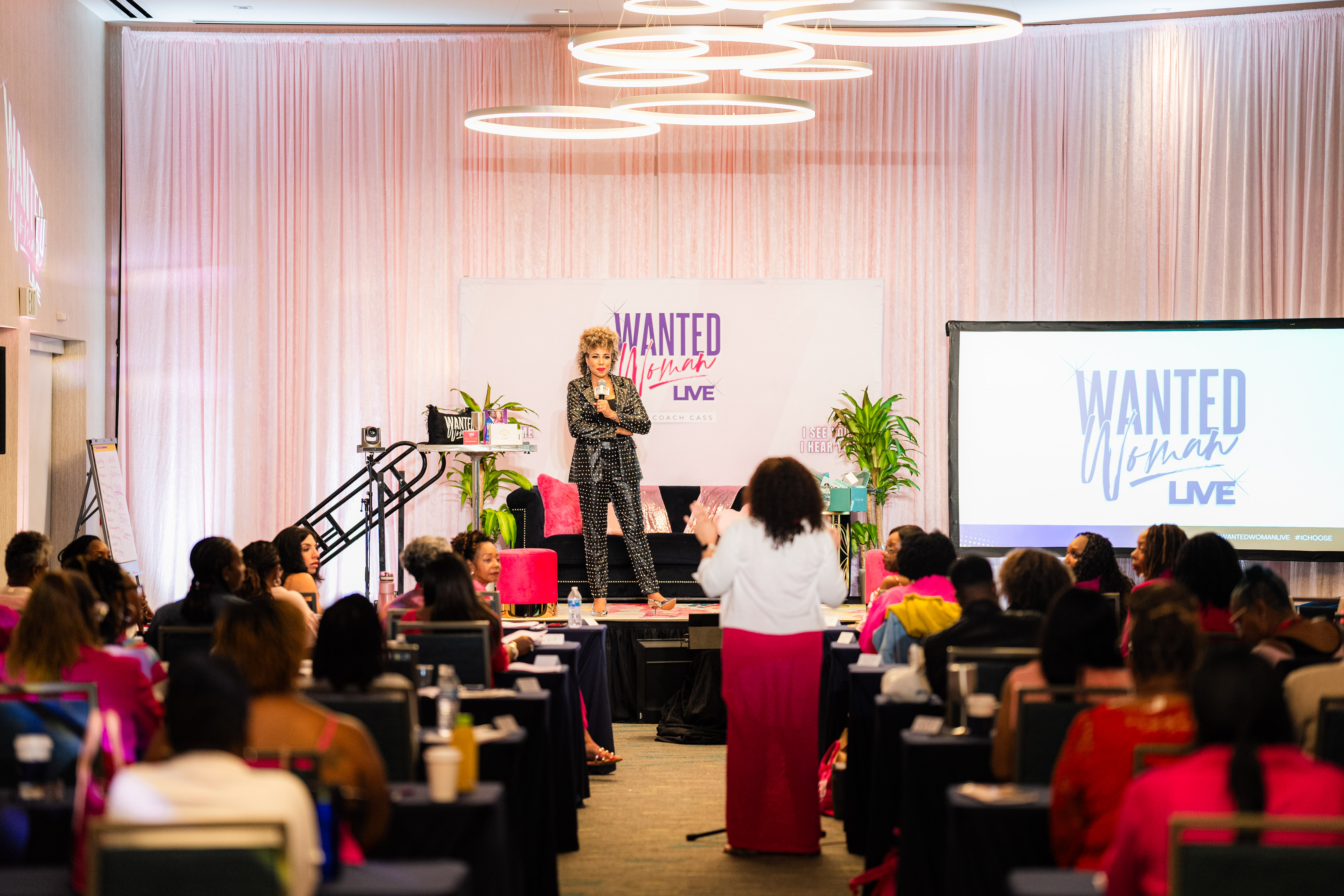
That is the work Coach Cass brings into organizations.
Not a feel good session.
Not a box to check.
A real conversation about the whole woman.
About what it costs when she disappears piece by piece inside a system that never learned to see her.
And about what becomes possible when an organization finally decides she is worth seeing.
What the Data Will Tell You and What It Cannot
Your engagement surveys will not capture this.
Your retention metrics will not show it until it is too late.
Your exit interviews will give you the professional reason she is leaving because she is too gracious and too professional to give you the real one.
The real one is that she stopped feeling like she mattered here.
Not as a performer.
As a person.
And the moment a woman of her caliber stops feeling like she matters as a person she starts looking for somewhere that will remind her that she does.
The organizations that figure this out before they lose her will not just retain an extraordinary employee.
They will unlock a level of commitment and creativity and leadership that most talent strategies have never come close to touching.
Because a woman who feels seen performs differently.
She leads differently.
She stays.
Not because she has to.
Because she wants to.
And the difference between those two things is everything.
An Invitation to the Organizations That Are Ready
If you are an HR leader, a DEI executive, an ERG leader, or a people-focused decision maker who recognizes this woman in your organization, this is your moment.
Not to add another program to the calendar.
To start a different conversation.
One that meets her where she actually is.
That addresses what she is actually carrying.
That invests in her wholeness the way she has always invested in your organization.
Coach Cass brings this conversation into corporations across the country.
The results are not soft.
When women feel whole they perform differently.
They lead differently.
They stay.
That is the return on investment most organizations are leaving on the table.
Reach out at [email protected] to learn more about bringing this work into your organization.
She has been giving everything to you for years.
It is time to give something real back.


